BY RICHARD NAYLOR

The veil of darkness that disguised my presence by the waterside disintegrates at the behest of the incoming dawn.
The tawny owls have long since ceased their calls to conceal their location and now consideration must be paid to my own conspicuity. I observe my breath as the plumes spiral before my eyes, obscuring the view of my rod tip nestled stealthily amidst the typha.
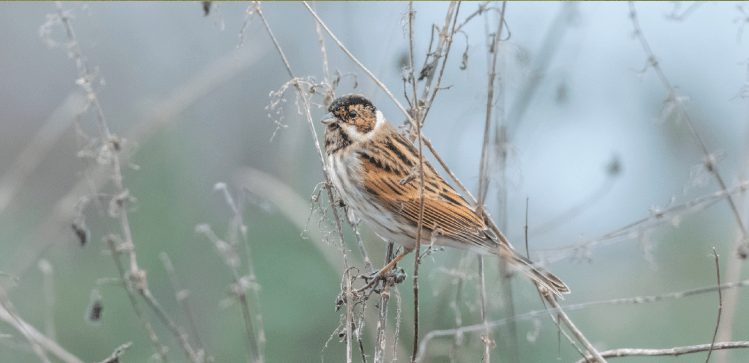
A reed bunting can be heard ranting in the rushes but my concentration is devoted to watching for twitches of the rod and trying to regain sensation in my toes. The frosty bite of the winter air on my cheeks starts to burn, but as my rod also appears to break into a shiver and my reel check groans in sympathy, the rod rapidly reaches towards the water and my poised hand acts on impulse to set the hook. As the inevitable ensues, the excitement seems to compartmentalise my experience of the climate as all my senses are focused on this direct connection with my quarry.
In this moment I feel a sense of fulfilment and gain a developed understanding of myself and the essence of my desire to be physically and mentally engaged with the natural world. However, the perceived accomplishment of catching a fish is only a small part of the picture.
We often talk about mental and physical engagement as if they are disconnected, but the mind and the body are not separate entities.
Our sense of self is not a disembodied ego; our brains and our bodies are connected and interdependent. Knowledge is not intrinsic or an abstract academic acquisition – as Merleau-Ponty suggested, we learn through our bodies and according to Heidegger, our existence is always understood in relation to our place in the world. We are of course inextricable from nature, and when we are distant from it due to the conventions of modern life, we experience stress and anxiety. We come from nature and are designed to live in harmony with it. It follows therefore, that in this environment, we can find our true selves.
When I consider what happens beneath the surface of the water, to truly know something, I rely on gathering empirical evidence, such as plumbing the depth, using a marker float or donning a pair of polaroids and gazing down into the depths. To know how the fish are behaving we can revert to the long-lost art of watercraft – reading the ripples and swells, the clouding and bubbles.

A river angler may look for a crease or an eddy. It is possible to distinguish which fish is biting by the way it causes a float to dance or a rod tip to rattle. For me, this is sufficient, but even the most astute angler will not have a comprehensive understanding of the plot.
That which cannot be ascertained must be imagined, and what is wrong with that?
For Deleuze, thought is a creative process and not just about recollecting reality or replicating factual information absorbed passively. Imagination isn’t just about fantasising or creating new images in the mind, but allowing thought to transcend established norms. This facilitates the creation of new concepts. It is through this faculty that new possibilities, and new ways of understanding the world, can emerge.
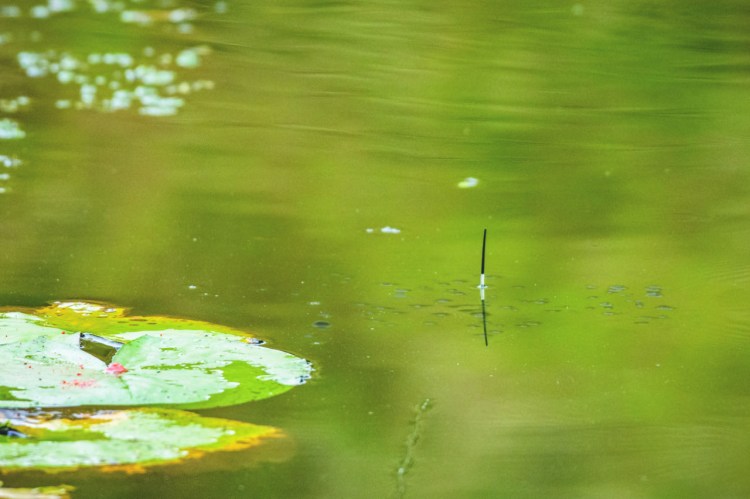
Protruding proud through the surface film, which defies gravity curving upwards to embrace it, my fine tapered quill stands to attention in a perpetual state of alert. Curious pond skaters sometimes approach and occasionally a damselfly takes a rest on the tip, depressing it further into the mirror-topped mirk. A short series of erratic jolts from side to side suggest a shoal of small roach are showing a passing interest in my breadflake hookbait. I ignore this and it goes away, though I make a conscious decision to take a chance on the integrity of my bait’s presentation. The sun has been baking down on my swim for some time but seems in an instant to have doubled its efforts. Tiny pin-pricks emerge on the surface a foot from my float. More and more bubbles join the silent chorus, progressively fizzing closer, proclaiming the possibility of crucians.
The intensity mounts with zeal as I stare intently at the quill, hoping to detect even the slightest of movements. An eruption ensues as my float lifts slightly then tows steadily, cocked at 45°, towards the cover of the neighbouring lilies. Surely this will be a tench…
In this place, I enjoy the not-knowing and take pleasure in simply supposing! Fully aware of the available technologies that demystify our sport, I relish the opportunity to let my imagination run wild about what might be happening underwater. Much like the well-known trope of Schroedinger’s cat, if I don’t have empirical evidence to say otherwise, I simultaneously do and don’t have record-breaking specimens in my swim checking out my hookbait with each twitch of the float – and this is a thrilling prospect! If I knew there definitely wasn’t any chance of the fish-of-a-lifetime, I might still enjoy being there, but the excitement and anticipation would simply not exist.

One of the things I love about the practice of modern carp fishing is the sense of freedom that commences once time has been committed to this end.
At the beginning of a weekend on the bank, one is presented with infinite possibilities as to how to act and interact within this environment. Sartre calls this freedom to define ourselves and determine our own possibilities ‘transcendence’, and the indisputable facts that cannot be changed, ‘facticity’. He writes at length about how we all have both, and though it is sometimes preferable to deny one or other of these, to do so is to act in what he calls ‘bad faith’.
My facticity is that I bring my personal context with me: the stress of the workplace competing for attention at the front of my mind, the sacrifice of the company of my family enabling me to be here at all, the tiredness of the week behind me and not least, the motive for being there; my objective of catching a special fish.
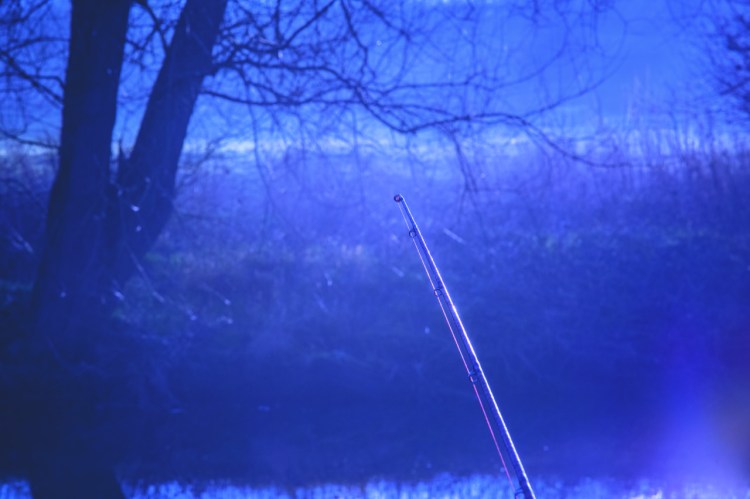
As I walk the banks I see great crested grebes and tufted ducks diving. Various warblers weave between the nearside reeds. I gain a sense of myself in relation to the vast expanse of water before me as I estimate the distance between myself and the far bank, the island, the lilies and how attainable these spots might be, bearing in mind my casting ability or lack thereof! I contemplate what might be causing the chop on the water to plateau in certain places. I see the shapes of the tree lined horizon and take pleasure from the array of warm autumnal colours they effuse. I am the subject in my own narrative. I perceive these objects all around me and proceed to operate with both transcendence and facticity.
Part of the fascination with fish as objects of my pursuit, is their unknowable otherness. When we see another human, we recognise them as being like ourselves – subjects operating as the centre of their own story. According to Sartre, when one is seen by another human, we are aware that they see us and are able to make judgements about us. They will perceive our facticity and make us feel robbed of our transcendence.
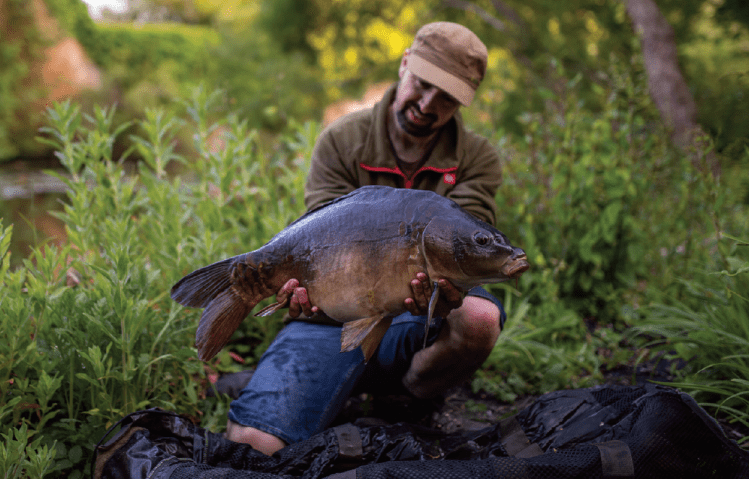
We feel self-conscious because we are no longer existing purely for ourselves but as something that can be judged or defined by someone else. When I catch a fish, and see it looking back at me, I don’t so much feel robbed of my freedom – I have acted of my own accord in catching it and bringing it momentarily into my domain, but recognise immediately that this is a being towards which I have an obligation of responsibility, for I no longer see the fish as an object to be sought, or caught, but as a subject in its own right. I cannot ever understand a fish as a transcendent being, as their frames of reference are alien to ours, relative to their embodied cognition of the underwater realm. Yet in this moment, these worlds intersect and present the privilege of beholding a subject which will always be enigmatic to me.
These are amongst the things I contemplate each time I sit by the waterside, quietly lost in thought whilst soaking up the abundant beauty of creation around me. In so doing, my mind often wanders to the last lines of the conversation between Venator, the hunter andour namesake, Piscator, the angler, at the end of The Compleat Angler by Izaak Walton:
Venator: …You advised me (…) concerning Angling, and I will endeavour to (…) live like those many worthy men (…) And as a pious man advised his friend, that, to beget mortification (…) consider how many dead bodies time had piled up at the gates of death, so when I would beget content (…) I will walk the meadows, by some gliding stream, and there contemplate the lilies that take no care, and those very many other various little living creatures that are not only created, but fed, man knows not how, by the goodness of the God of Nature (…)
Piscator: And upon all that are lovers of virtue; and dare trust in His providence; and be quiet; and go a Angling.
‘Study to be quiet.’
The Compleat Angler by Izaak Walton, 1653
Here, Venator declares the desire to live a life with no regrets at the end, and in doing so, achieve a sense of contentment or feeling ‘compleat’.
The image of the lilies is a reference to a parable told in Matthew 6 v.28 in which Jesus basically says we shouldn’t sweat the small stuff but trust that God will take care of it. I don’t think it is a coincidence that, in The Compleat Angler or in the book of Matthew, pastoral imagery is used to depict providence and contentment.
The sentiment behind the parting statement ‘be quiet; and go a angling’ (which has a similar ring to it as ‘keep calm and carry on!’) and the final quote ‘Study to be quiet’ is taken from a verse of scripture:
And that ye study to be quiet, and to do your own business, and to work with your own hands, as we commanded you; That ye may walk honestly toward them that are without and that ye may lack of nothing.
1 Thessalonians Ch. 4 v.11-12
The implication here is that we should make it our ambition to lead honest, quiet or peaceful lives and ultimately, this will lead to spiritual fulfilment. A commendable notion for sure. Walton’s use of this scripture supports the inference that angling facilitates being closer to the Creator by spending time immersed in His creation. Irrespective of our particular faiths or lack thereof, we cannot deny that we are a part of nature nor can we refute its beauty.
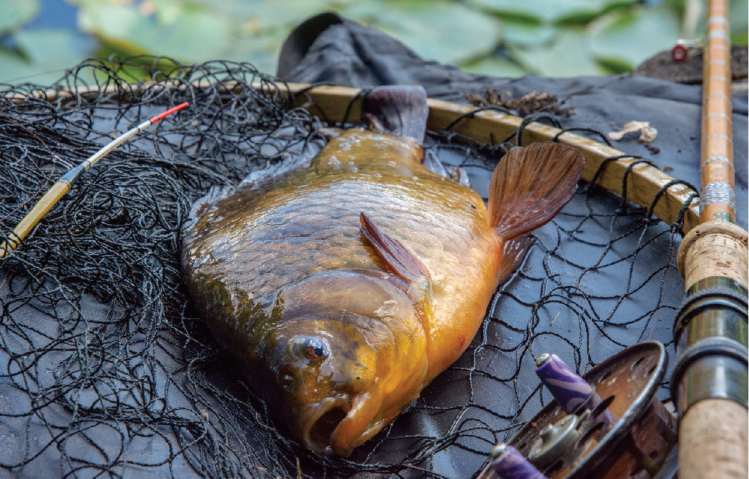
I believe Walton extracts these words to be read in isolation intentionally however, so their numerous possible interpretations can be contemplated. A compleat, or content angler is surely one who studies his target species and the water in which it abides, as well as being stealthy and quiet in order to fox his prey. Simultaneously, studying or working to pursue a quiet, or peaceful life is a noble goal for anyone. In doing this, we will naturally develop a greater understanding of ourselves and arguably become a better manifestation of ourselves as well as better anglers.

So I wish that all who read this might find peace by the water. I hope that immersing yourselves in nature will help you to transcend your facticity. May you all be ‘compleat anglers’, content with your endeavours on the bank and I commend you all to ‘Study to be quiet’.
 Piscator